1. Introduction
Our research has shown four key trends emerging from automation and AI technologies that are revolutionizing logistics industry:
-
Upgrading freight handling through automation
-
Embracing AI to optimize routes
-
Improving the in-store experience through automation
-
Automating back-office processes
2. Logistics industry transformation: imagine a world
Imagine a world in which automated warehouses can pick, pack, palletize and load goods into trailers with fully automated solutions. These capabilities assist in the increased speed of cross-docking and trailer packout activities, while lowering the cost profile for logistics companies.
Imagine a world in which trailers back into a dock at a large distribution center, and the distribution center already knows it’s coming using routing and telematics information tools, knows the contents of the trailer and its packing structure.
Imagine a world where truck drivers can share their preferences with truck stops through a voice chatbot, including their wish to take a shower, the food they’d like to order and the newspaper they want to read. Oh, and by the way, in this imaginary world, which isn’t as imaginary as you might think, all this is already paid for via mobile pay technology.
AI is continuing to unlock new efficiency benefits for companies operating in the freight transportation industry. AI brings changes to the supply chain, enabling fleet operators to reduce operating costs and fuel consumption. Logistics firms recognize the transformative power of AI, and many are investing heavily in the technology. Early adopters that have implemented AI in logistics have achieved remarkable improvements, reducing logistics costs by 15%, optimizing inventory levels by 35% and enhancing service levels by 65%.1
The transformation of the trucking and logistics industry is still taking shape, and strategies are still being discussed and developed. But the future is here, and it’s up to industry leaders to determine what happens next.
3. Three scenarios for the future of logistics
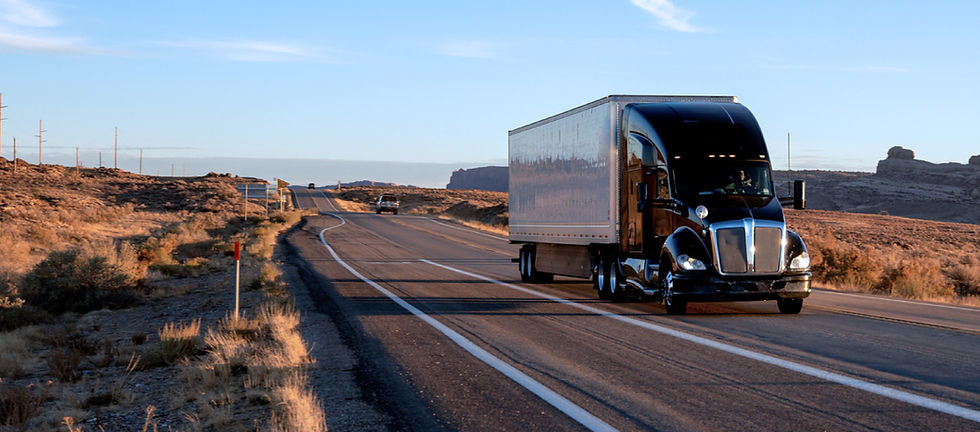
Embracing the automation in Logistics Industry
3.1. Accelerated adoption of automation and AI technologies
The challenges brought about by the pandemic and recent geopolitical events underscore the need to fast-track the integration of automation technologies. In addition to these advances, sustainable and green technologies also gain prominence, given the increasing emphasis on environmental responsibility. Through AI and automation, tools such as route optimization and advanced driving systems narrow the distance to full autonomy.
3.2. Slow and cautious adoption of automation and AI technologies
Slow and cautious adoption allows companies to build a robust ecosystem of blended operations. This approach employs automation tools, robots and AI algorithms to carry out repetitive, mundane or high-volume tasks, helping to ensure efficiency and precision while humans handle more intricate roles. However, labor costs might only barely decrease as human expertise remains essential.
3.3. Patchwork regulatory environment complicates technology adoption
In this scenario, trucking and logistics companies navigate diverse regulations across different regions, as well as backlash from labor unions, and factors related to technology integration. Inconsistent regulations slow down the research and development phase, and companies are reluctant to develop new solutions without being confident in the regulatory landscape they’ll be entering.