6つのコアビジネスをカバー
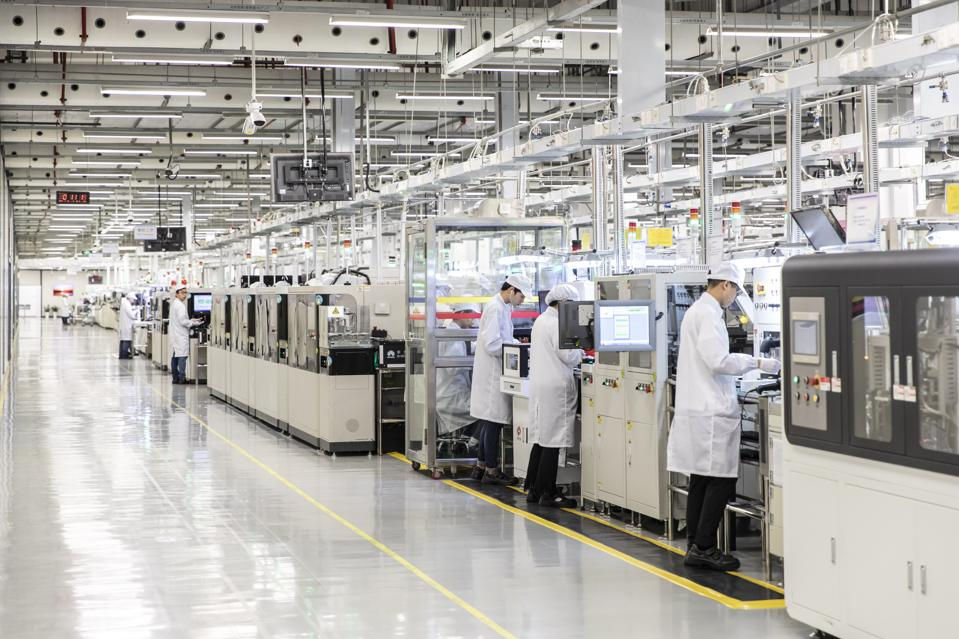
The electronics industry is unique, with its rapid technological advancements and changing consumer demands. Such dynamics call for ERP software solutions tailored specifically for this sector. ERP for electronics industry focuses on real-time inventory tracking, quality assurance, and compliance management, ensuring that manufacturers can keep up with the fast-paced market while maintaining product quality.
Unlike generic systems, electronics manufacturing software provides the tools necessary to manage intricate supply chains and optimize resource allocation. By linking sales forecasts with production planning, electronics ERP enables manufacturers to respond quickly to market demands, ensuring they stay competitive.
6つのコアビジネスをカバー
Electronics manufacturing software must come equipped with certain features to be effective. Real-time inventory management is crucial, helping manufacturers avoid overstocking or stockouts and ensuring smooth production processes. Quality control is another critical area, with ERP systems automating quality checks to meet stringent industry standards.
Integration capabilities with existing systems, such as supply chain software and financial management software, are also vital. This ensures a seamless flow of information across departments, enhancing decision-making and operational efficiency. By choosing an ERP software for electronics that offers these features, manufacturers can improve their competitiveness.
データが分断されており、ビジネスを連携させることが難しい
販売データ:受注から販売注文 - 配送/返品/返品 - 売掛金 - 調整 - 回収、フルリンク実行追跡 + 管理は、単一のカンバンボードでは実現できません。
在庫管理が難しく、生産と効果的に連携できません。
在庫の警告と確認:直接性が不十分、需要に一致せず、通知が届かないことが多く、在庫を確認できない
経営管理において、このような問題に遭遇したことはありませんか?
生産需要を予測できず、生産コストを管理できない
生産コスト:マスター生産計画 MPS と計画実行進捗統計はリアルタイムではなく、納期が遅れることがよくあります。
生産プロセスを閉ループで監視することができないため、生産の進行に影響します。
生産進捗:作業指示書 - 報告 - 品質検査 - 倉庫保管までのタスク実行プロセス全体のクローズドループ監視が欠落しており、タスクの進捗が不明です。
ERP機能モジュール
Before deeper dive into the differences between discrete and process manufacturing, let's first define some important terms:
Work Center
A work center, a term predominantly used in the discrete manufacturing industry, is a specific location or station within the manufacturing environment where a set of related tasks or operations are performed. This can range from a single machine, a group of machines, or even a whole production line, depending on the complexity and scale of the operations. In the discrete manufacturing context, each work center is typically specialized for a specific type of task.
For example, in a bicycle manufacturing plant, one work center might be dedicated to creating the frames, another to painting the bicycle frames, another to assembling the parts together, and so on. This allocation of specific tasks to dedicated work centers enables efficient workflow, precise scheduling, improved quality control, and effective resource utilization within the manufacturing process.
Routing
A routing is a term used in the discrete manufacturing industry. It refers to the sequence of operations or steps that are needed to complete the production of a specific product. It defines the flow of materials and work through the production process, from start to finish. In the context of the discrete manufacturing industry, each step in the routing process represents a specific operation in the production cycle, such as machining, welding, assembling, painting, or inspection.
At each of these stages, the product will undergo a specific transformation or process as it moves towards becoming a finished good. By establishing and following a routing sequence, companies can standardize and streamline their production activities, facilitating improved efficiency, quality control, and cost management.
Resources
A resource, a term predominantly used in the process manufacturing industry, is analogous to a work center in the discrete manufacturing industry. It describes a specific location or station within the production process where a set of related tasks or operations are performed. In the context of process manufacturing, a resource could be a certain machine, a group of machines, or a particular area within the plant that performs a specific function or set of functions.
In a chemical plant, one resource could be a reactor where raw materials undergo chemical transformation, another could be a distillation column for separating mixtures, and so on. Just like a work center, a resource is integral to production process planning, scheduling, and resource management, providing a means to structure, standardize, and optimize the flow of work in a process manufacturing environment.
Bill of Material (BOM)
A Bill of Material (BOM) is a comprehensive list of parts, components, assemblies, and other materials required to produce a product. It is essentially a recipe or blueprint for production. A BOM includes the quantity of each item, specifications, and sometimes even the sequence of assembly. It is an essential tool for production planning, inventory management, cost estimation, and ensuring that all necessary materials are available for production.
For example, in a bicycle manufacturing process, a BOM might list items such as the frame, handlebars, wheels, gears, screws, and paint, along with the quantity required for each to produce a single bicycle.
For example, in a paint production process, a BOM might list items such as basic paint, solvent, pigment, stabilitzers, and additives along with the quantity required to manufacture a certain amount of paint. Usually, the quantities refer to a standard production quantity, for example 1000 kg which you usually produce.