Deloitte's current resources and insights highlight automation, high-speed connectivity, machine learning and low-cost computing as current challenges and topical issues in Industry 4.0 concepts in the automotive industry. Among the main conditions for the prosperity of today's businesses, it is recommended to digitize all processes and invest in the latest available technologies. New technologies are new carriers of competitive advantage. [12]
The company also outlines key questions that a company should ask if it wants to be successful in Industry 4.0: What will the future customer demand? Which innovation benefits will hit the automotive industry hardest? How will we sponsor investments needed for development or research? The current direction in the production of the automotive industry will focus mainly on electric cars and alternative forms of motor drives. Petrol and diesel engines replace hybrid drives or electric motors. Autonomous vehicles with their own control algorithms are a separate phenomenon. An important prerequisite for the sale and successful operation of such cars is to ensure a functioning infrastructure in the country, such as charging station. However, the state should also provide significant support. In this case, a natural demand for the right type of car will be created. Currently, the largest players in the market are countries such as the USA, India, Germany, China, South Korea and Japan. [16]
3. Methodology
4. Results and discussion
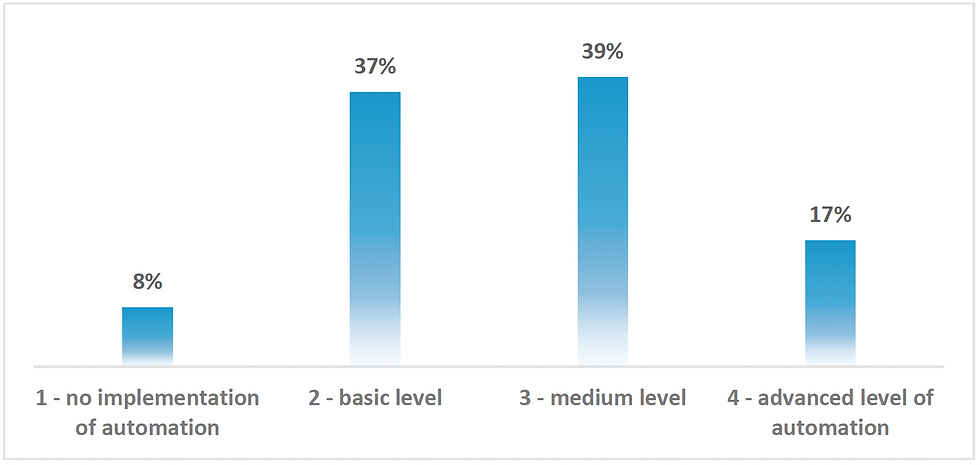
Fig. 1. Level of automation elements implementation
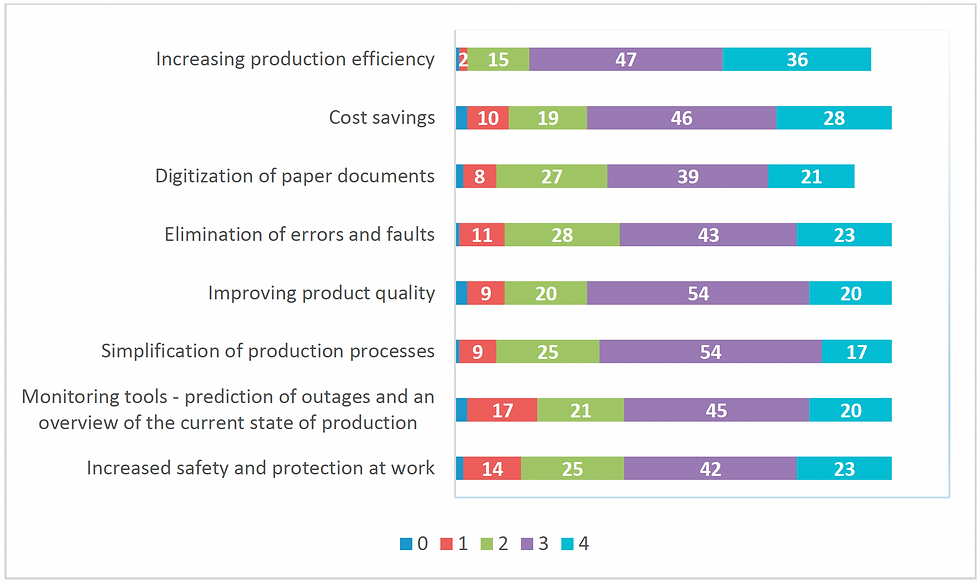
Fig. 2. Advantages within the implementation of automated production
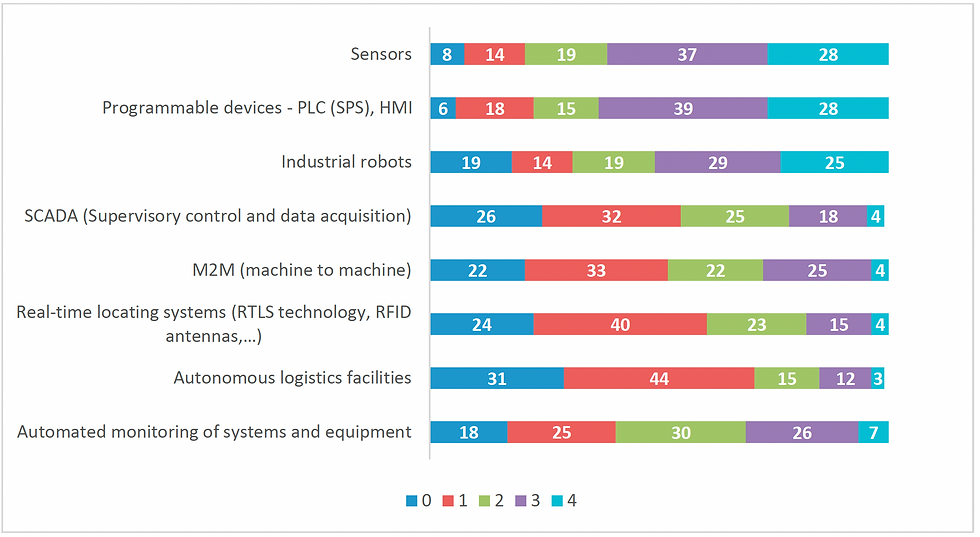
Fig. 3. Level of use of Industry 4.0 components
Table 2. Average values of the implementation level of automation elements
Assumption 1: Robots and programmable devices are the most widely used element in automated manufacturing across the entire automotive industry.
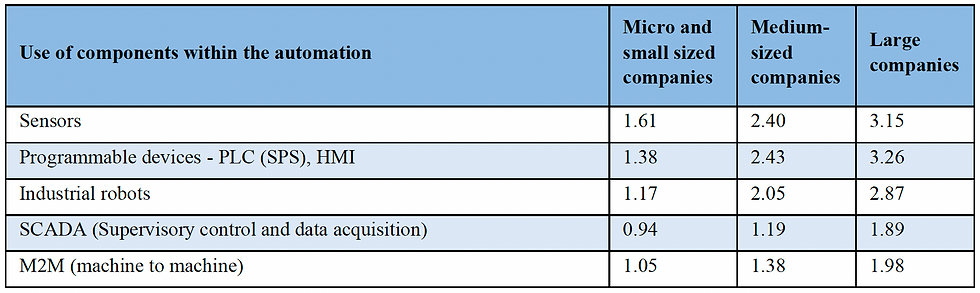
From the results (Table 2), we can see that large enterprises use each technology at a more advanced level than medium and small-sized enterprises. It is also true that the highest level in each category was reached by sensors and programmable devices in medium-sized and large companies. Industrial robots were mostly used in large and medium-sized enterprises on the third place.
Result: The given statement in assumption no. 1 does not apply. However, a partial of the statement can be applied - programmable devices are the most used element across the entire automotive industry.
Assumption 2: Large manufacturing companies implement automation elements at a more advanced level than medium and small businesses.
From the results (Table 2), we can confirm that large companies have on average more advanced level of automation (3.04 on scale 1-4, where 4 is the highest, the level 3 – medium level of implementation). We can see higher level of the implementation in all components in large companies. It is also true that medium-sized enterprises implement elements of automation at a higher level than small enterprises and micro-enterprises. However, none of the components is implemented on average on highest level / the most advanced level.
Result: The statement in hypothesis no. 2 is valid and large manufacturing companies implement automation elements at a more advanced level than medium and small enterprises.
5. Conclusion
The paper emphasized the importance of automated production, which opens the door in the sphere of manufacturing companies. As research has shown, production processes are important for companies, especially with the aim to provide their efficiency and fluidity. In the manufacturing industry, companies try to avoid unnecessary downtime and errors, they try to prevent incidents rather than solve them. Investment in the right, reliable and supported technologies should therefore be a matter of course. In the processes themselves, in terms of IT and technology, the correct order in the operation of ITIL can be introduced by service management, which is constantly updated for the needs of services - currently the 4th generation of ideas.
We found out, based on verifying our assumptions, that sensors and programmable devices are the most used element in automotive industry and that large manufacturing companies implement automation elements at a more advanced level than small and medium-sized enterprises. As smaller companies in general are more limited, especially with financial sources, we can point out the possibilities in form of collaboration with external partners [21] like research institution, universities or with business incubators. These forms of cooperation can be less costly than existing suppliers in the market - the initial costs were one of the biggest obstacles to the implementation of technology. There is also room for the development of completely new technologies, optimization of existing systems, or automation of production processes.
Current resources and insights from the consulting company Deloitte [12] highlight automation, high-speed connectivity, machine learning and low-cost computing as current technologies in Industry 4.0 in the automotive industry as challenges and discussed topics. Among the main conditions for the prosperity of today's businesses, it is recommended to digitize all processes and invest in the latest available technologies. Not to lag behind innovations, but also to invest in our own research, because new technologies are new carriers of competitive advantage. At present, co-bots are also referred to as a new generation of automated robots, which are slowly beginning to replace classic industrial robots. Investments in new and correct technologies bring competitive advantages in this segment. Co-bots are much more flexible, safer, more sophisticated. They can be easily used and connected to existing systems. They can also increase the quality or speed of the production process. Large players such as BMW and Nissan can already boast of this technology on the world market. In this paper we tried to emphasize the use of technologies and their positive impact on the company. But we cannot also forget the downsides which this phase of the industrial revolution brought with it - security vulnerabilities, the question of the cost of operational inquiries, the need to change business processes, or a very current topic - the disruption and failure of wireless communication directly in production. These areas are also worth studying and bringing closer look in the further research questions.
Acknowledgements
This research was supported and funded by APVV-17-0656 titled Transformation of Paradigm in Management of Organizations in the Context of Industry 4.0, and VEGA 1/0792/20.

涵盖6大核心业务
4.4. Assumptions
We set two assumptions. To facilitate verification, we present the following Table 2. which shows the average level of use of individual automation elements within different size categories of companies. According to the analyzed results we can see and compare the differences between 3 categories of companies regarding the size.
4.3. Specific components of Industry 4.0 and the level of their implementation
In this question, we examined the application level of other technologies that complement automated production - IoT, cloud computing, big data, 3D printing, artificial intelligence, process simulation, energy monitoring or others. The rating was based on a Likert scale from 0 to 4, where 0 is no use or minimal use and 4 is use at an advanced level.
The results in Fig. 3. showed the advanced level use of sensors, programmable devices and industrial robots. These technologies were implemented mostly in large companies with 5-15 years history on the market and producing in the growth phase of their operating activities. The lower level of use (in the scale 0, 1 ranking) of SCADA, M2M and autonomous logistics facilities was confirmed by medium-sized enterprises within the stabilization phase.
SCADA is a relatively not frequently used system that helps companies in operational production. In addition to displaying the current progress in production, it can also monitor energy consumption and can thus provide input data for possible optimizations within the system.
To conclude, it is possible to highlight the advantages of automated monitoring in manufacturing companies - reducing equipment maintenance costs, increasing system availability, minimizing outages and early detection of errors. Monitoring tools can also monitor the efficiency of energy consumption. The lack of these systems in the manufacturing companies can cause several disadvantages comparing to the rivals within the industry. It is therefore necessary to adapt businesses to these trends and to prepare for the challenges ahead.
4.2. Advantages of Industry 4.0
In the next part, we examined the benefits that companies gain with the implementation of automated production. We identified the following benefits: increased efficiency of production, cost savings, digitization of paper documents, elimination of errors and faults, increased product quality, simplification of production processes, monitoring tools - outage prediction and overview of the current state of production and finally, increased safety and protection at work. The rating was based on a Likert scale from 0 to 4, where 0 is minimal / no benefit and 4 is a significant / key benefit.
In the Fig. 2., we see the cumulative results for all surveyed companies. The best evaluated attributes (in the scale 4 and 3 ranking) were following categories: increasing production efficiency, cost savings, improving product quality and simplification of production processes. The attributes such as the elimination of errors, monitoring tools and digitization of paper documents also prevailed in the positive effect (in the scale mostly 3 and 2 ranking). In the scale rated as 1 and 2, there were dominated attributes such as increased safety and protection at work and elimination of errors as well.
The analysis by number of employees showed that the most important parameters for medium and large companies are - efficiency of production, digitization of paper production, simplification of production processes and monitoring tools. It is also worth mentioning the parameter of cost savings, which was enforced by most of the small enterprises. We described the individual advantages and reasons in the theoretical part. However, for any company, each of these benefits is an essential part of their normal operation on the market. As for the life cycle and the duration of operating on the market, the dominant factors for companies with the length of more than 15 years and within the stabilization and growth phase were cost savings and improving product quality.
4.1. The level of automation implementation
In the first part, we examined the level of implementation of automation elements in the production process. It includes industrial robots, programmable devices, autonomous devices, logistics technologies, localization technologies, SCADA systems, and automated monitoring. We used the following scale: 1 - we do not implement automated production, 2 - basic level of implementation, 3 - medium level of implementation, 4 - highest / advanced level of automation implementation.
From the Fig.1. we can see that only 8% companies stated the lowest level or no implementation of such automation elements. Almost the same number of companies (37% and 39%) pointed out the basic or medium level of implementation and 17% companies chose the answer of advanced level. The advanced level of application was confirmed mostly by large and medium-sized companies, with more than 15 years old history on the market. Concerning the life cycle of these companies, the growth phase was dominant. As expected, the low application or no use of automation technologies was the common answer by micro or small companies within the stabilization phase, operating on the market 5-15 years.
According to the industry category, the highest / advanced level of automation implementation was stated by motor vehicles manufacturing companies and by companies manufacturing other parts and components for motor vehicles.
3.2. Research sample and data collection
To collect the data, we prepared a questionnaire survey, which was anonymous and allowed individual companies to express themselves freely. The questionnaire was designed to help reveal a more complete picture on the automotive manufacturing industry in the Slovak Republic and Czech Republic, but at the same time preserved the know-how aspects of these companies. To collect the data, we chose to use electronic questionnaire. To formulate questions, we used theoretical review of previous studies and research. We examined companies within the automotive industry operating in Slovakia and in the Czech Republic, with a focus on production. As for research purposes we divided them into 3 groups - small, medium-sized and large enterprises. The questionnaire was sent to about 300 selected companies operating in Slovakia and Czech Republic. We selected companies from Slovak and Czech databases of companies like FinStat.sk, živéfirmy.cz and azet.sk. The survey was sent to Operations Managers or Technical Managers. As for the categories in the selected automotive industry, we decided for these categories (SK NACE 29): Manufacture of motor vehicles, Manufacture of other parts and components for motor vehicles, Production of modules (module supplier), Production of electronic components for motor vehicles. The questionnaire was correctly completed by a total of 106 respondents.
For research purposes, companies were divided into groups based on size, age and life cycle of the core business. The results of the sample distribution are presented in the Table 1. The majority of respondents were representatives from large companies (46) in comparison to 18 micro and small sized companies. From the surveyed companies there were companies mostly operating on the market more than 15 years (79) and those which are currently in the growth phase in their life cycle. We think that such companies have a better precondition in implementing concepts of Industry 4.0 - thoroughly analyzed market, external and internal conditions, suppliers’ network, professional workforce and own research are the prerequisites for successful existence in these conditions.
3.1. Research Goal
The automotive industry is currently dominant in many European countries, but also around the world. The production segment, especially in Slovakia and the Czech Republic, consists of the main contribution of state GDP. The technologies of the 4th industrial revolution are bringing an unprecedented dimension to this segment and move it forward by miles. These two countries have been at the forefront of the number of vehicles produced per population. In our research, we decided to evaluate the level of adaptation and progress of companies in the implementation of technologies of the 4th industrial revolution and elements of automation. As we do not yet record a similarly focused study at this level, we consider this research to be beneficial, especially for the automotive industry.
The aim of our paper is to identify the level of use of technology within the industry 4.0 with a focus on supporting automation on a sample of Slovak and Czech companies in the automotive industry. In the questionnaire, we also used questions related to the implementation of automation, delivery of IT services, network outages or supporting technologies of Industry 4.0.
We formulated two assumptions on the basis of theoretical knowledge, professional and current articles in the topic, also on the basis of personal experience and observation in the automotive segment. To facilitate verification, we present the results which show the average level of use of individual automation elements within different size categories of companies. The sample was divided according to the size of the company in terms of number of employees (micro/small, medium-sized and large). The elements in various questions were evaluated on scale 1 - not implemented yet, 2 - basic level of implementation, 3 - medium level of implementation, 4 - highest / advanced level of implementation.
Assumption 1: Robots and programmable devices are the most widely used elements in automated manufacturing across the entire automotive industry.
Assumption 2: Large manufacturing companies implement elements of automation at a more advanced level than medium and small sized companies.
2.3. Automation in the context of Industry 4.0
The term automation in the sense of Industry 4.0 can be perceived as a set of technologies that allow to perform machine operations and operations within systems, without significant human intervention. [2] This is the main difference from manual work. Such a system or device should have the following characteristics: sufficiently inform about the running / operating mode of the device, warn of dangerous threats and the possibility of manual restriction, or human intervention. Among such systems, we can include e.g. HMI panels (Human Machine Interface), SCADA visualizations (Supervisory Control and Data Acquisition), PLC programmable devices, industrial robots, autonomous logistics devices and others. Then there is the possibility of automatic processes converging even at the system level. Such systems either perform, back up, or monitor something (automated monitoring). [17]
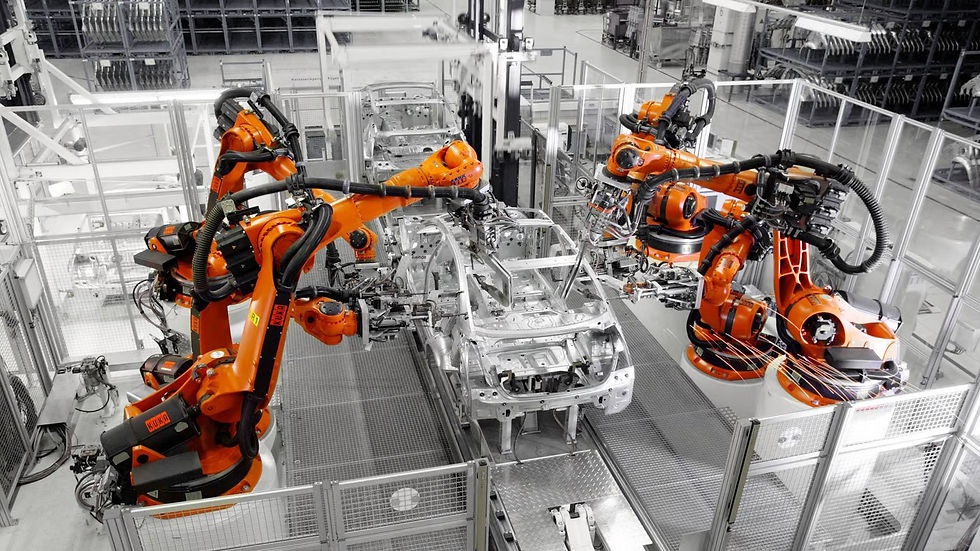
The individual terminals in production have different properties, with which they can either communicate with each other, or they can be optimized / programmed or monitored. There are also devices that have autonomous control, or we can control them remotely. Robots have the most key representation because they are autonomous, they can be programmed; they are also characterized by security mechanisms. Such robots replace human work on assembly lines or e.g. during welding work.
To consider automation within Industry 4.0, it is important to mention supporting technologies such as IoT, cloud computing, big data analysis, 3D printing, artificial intelligence, process simulation, or monitoring. IoT is a concept that involves different types of communication between terminal equipment (physical objects) and the Internet. In manufacturing industries, the concept of IIoT – (Industrial IoT) applies to industrial production and types of communication within production plants. It is necessary to also mention M2M (machine-to machine), which is a specific type of communication between two different devices either wirelessly or via a fixed network. Smart factory is a term used in a manufacturing company, which applies Industry 4.0 concepts. [18] Among IIoT, we can include all devices, services, network technologies, applications, sensors, software, or storage systems that are applied within manufacturing industries. They can monitor and control production processes, equipment and their current status. They increase efficiency in terms of production and evaluate real-time process operation. [19] IoT is a basic prerequisite for implementing automation in manufacturing industry. Specifically, in the automotive industry, we find various technologies, mainly industrial robots, programmable PLC devices, HMI stations, visualization technologies (SCADA), logistics solutions (logistics platform 4.0) and localization technologies such as RFID, RTLS. Such devices have the ability to quickly exchange data, the possibility receiving feedback, alarms, or other alerts. They are also connected to the central systems that control them. Within logistics technologies, the door is opening for optimization solutions and cost reduction by improving existing routes. Devices can also store records - the so-called logs that can be analyzed within service management. One of the serious disadvantages and challenges, however, remains security risk and vulnerability through network communication within these devices which uses Industry 4.0 concepts. [20]
2.2. Advantages of Industry 4.0 concept implementation in manufacturing
In general, Industry 4.0 can bring a lot of advantages for manufacturing companies: [12,13,14]
-
Agile supply chain - technologies in a very efficient way help with logistics concepts such as JIT (just-in-time). It is possible to modify orders very easily and quickly, respond in a timely manner and adapt the process to your needs - either on the supplier's side or on the customer's side.
-
Prediction and monitoring tools - production companies usually operate continuously in 24-hour operation; it is therefore necessary to prevent possible outages or interruptions in production on the part of IT systems and production technologies. Robust monitoring tools, which help to detect faults or failures on individual systems in good time, serve us perfectly within the framework of the Industry 4.0 concept.
-
Ability to adapt systems – before, there was not much room for adaptation within the production process. Industry 4.0 technologies make it possible to set up and program devices so that different models of the manufactured product (different colors, different parts on the line, etc.) can be produced simultaneously on one line - of course, following the expected sequence.
-
Flexibility of network technologies - this is not just about configuration network elements in terms of communication speed, which is very important directly in the production part. But it is also a possibility of connection and communication to the outside world. This makes the whole production process more compatible and dynamic. Of course, using the required security rules when communicating out of the organization.
-
Digitization of documents and processes - this can also be understood as a prerequisite for the implementation of automation processes. Digitization should also take place at the horizontal (supplier - company - customer) chain, but also at the vertical level (across departments of the organization).
-
Increase of production capacity and efficiency - this advantage is provided by Industry 4.0 technologies that can be used to optimize energy consumption, the production process itself, improve the redistribution of resources, produce larger volumes on the production line and at the same time identify places for new improvements.
1. Introduction
Modern technologies, which are used in today's modern automobile production, contain elements of automation. Automation can bring a lot of benefits for production, especially it simplifies processes and streamlines production which results to reduced time requirements and labor costs. We can find cheaper and more capable technologies on the market that helps to accelerating the growth of fully automated production. [1] The automation in manufacturing industry can enhance higher quality, reduce lead time, simplify production and improve workflow. [2]
Automation plays an important role in automotive industry. Automotive automation technologies are constantly advancing. Nowadays, challenges and opportunities are coming with Industry 4.0 that are moving automotive industry significantly since the 1st industrial revolution. We recognize four major phases of industrial revolution [3], each brought some level of innovations and technological development. The beginning of industrial revolution can be dated to the period of the 60s of the 18th century. The 1st industrial revolution is represented with beginning of usage of new source of energy, the steam engine. The 2nd industrial revolution improved production with the discovery of electricity and implementation assembly lines. The 3rd industrial revolution came with computer technologies - computers or PLC programmable devices. In the 4th industrial revolution, advanced robotic devices, 3D printing, Internet of Things, or automated production are introduced into manufacturing companies. [4]
Since the beginning of the 2nd industrial revolution, an excellent basis has been created for the implementation of technologies in the automotive industry that are significantly improving and advancing over time. The automotive market is essentially global and the industry segment very attractive. When introducing the technologies of the 4th industrial revolution, automotive companies have many possibilities to use elements of automation, which often greatly simplify the production process. [5] Evolution of artificial intelligence, robotics, and sensors will likely lead to many innovations in automotive industry. [6] The combination of these new technologies is referred to as “Industry 4.0”. [7] The automotive industry is considered as a pioneer of Industry 4.0 [8] which is investing in new technologies connected to industry around 65 billion USD per year. [9]
In terms of industry 4.0, we understand automation as a set of technologies that allow to perform machine operations and operations within systems, without significant human intervention. This is also the main difference from manual work. [10] Among such systems we can include HMI panels (Human Machine Interface), SCADA visualization (Supervisory Control and Data Acquisition), PLC programmable devices, industrial robots, autonomous logistics devices and others. Robots have the most key representation because they are autonomously, they can be programmed; they are also characterized by security mechanisms.
The automotive industry is the current dominant in many European countries, but also around the world. The production segment, especially in Slovakia and the Czech Republic, consists of the main contribution of state GDP. In our research, we decided to evaluate the level of adaptation and progress of companies in the implementation of technologies of the 4th industrial revolution and elements of automation. We formulated 2 assumptions on the basis of theoretical knowledge, professional and current articles in the topic, also on the basis of personal experience and observation in the automotive industry. The questionnaire was distributed to automotive manufacturing companies and their Operations/Technical Managers. We verified the assumptions by testing and comparing the average level in different types of companies (small, medium-sized and large).
2. Literature review
2.1. Effects of industrial revolutions on manufacturing
In the literature, we can find precisely specified characteristics of each individual period of industrial revolution, the cross-section of technological shifts and individual milestones. [11] It all started in the 18th century with the first industrial revolution, when steam engines and manufactory production using new technologies were introduced in the textile industry. Manual labor was replaced by machine production. Efficiency and productivity of work have been increased several times. The steamer was also a key shift in the industry in transportation. Other characteristics include specialization within the workforce and the use of new materials such as steel. [3]
The second industrial revolution took place in the 19th - 20th centuries. The main pillars of this phase were the invention of electricity and the concept of using the assembly line. Henry Ford introduced belt production in the automotive industry, which again opened the space for increasing production capacity and at the same time at lower costs. The first automated operations came to the fore and computers were also invented. [11]
The third industrial revolution began in the middle of the 20th century. The biggest characteristics are digital technologies - programmable logic controllers (PLCs) or robots. That enabled the emergence of automation such as peak of industrial production. Devices can communicate with each other using a network communication to the outside world via the Internet. To the foreground computers and the first computer systems are also provided; analog connections have been transformed into digital ones. [5] Automation replaces the human workforce.
In the 21st century, there was again "boom" in technology, which resulted in the start of the 4th industrial revolution. New concepts such as IoT (Internet of Things), elements of artificial intelligence, improved robotics, fully automated production, 3D printing, or high-speed network connections using optical fiber are added to the production process. The concept of predictive maintenance is also gaining in importance, when intelligent devices signal faults in advance and can thus significantly prevent outages. With these technologies, the production process and costs can be easily optimized. It is necessary to realize that the 4th Industrial Revolution affected manufacturing enterprises across all processes of the organization - e.g. logistics, management or marketing. Man, as a productive force can be removed from the production process and intelligent devices can communicate with each other. [11] To succeed nowadays, automotive companies will likely need to bind a variety of advanced technologies. Technologies causing extensive transformation of the global automotive sector are commonly called the CASE (connectivity, autonomy, shared mobility, and electrification) technologies. [12]